

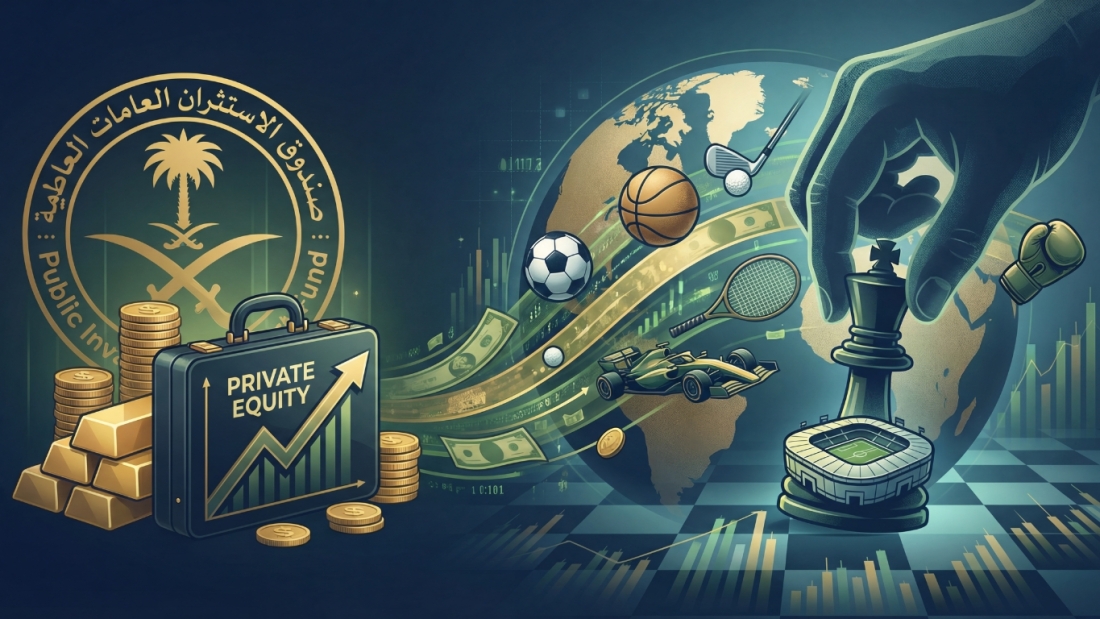
If you’re not paying attention to where the money’s coming from in global sports, you’re missing the global sport shift of the decade. While fans debate player trades and coaching decisions, a more fundamental shift is happening: the financial architecture of global sports is being rewritten by Saudi Arabia’s Public Investment Fund and an army of private equity firms armed with over $1 trillion in un-deployed capital. This isn’t speculation. This is observable reality, backed by deals worth hundreds of billions.
The Saudi PIF controls $925 billion in assets and aims to hit $1 trillion by 2025. That’s not a fund. That’s a weapon. And it’s aimed directly at sports—football, golf, tennis, boxing, MMA, Formula 1, esports, cricket, horse racing. If it involves competition and eyeballs, Saudi Arabia wants ownership.
Meanwhile, private equity firms like Arctos Partners, RedBird Capital, and Ares Management are buying minority stakes in teams across the NFL, NBA, MLB, NHL, and MLS. The NFL—the last holdout—finally opened the door in 2024, allowing PE funds to acquire up to 10% of teams. When the most conservative league in American sports caves to private equity, you know something fundamental has changed. This isn’t a trend. This is a takeover. And most people haven’t even noticed it’s happening.
The Saudi Strategy: Vision 2030 and the Sportswashing Playbook
Saudi Arabia’s Crown Prince Mohammed bin Salman launched Vision 2030 in 2016 with a clear goal: diversify the economy away from oil and improve Saudi Arabia’s international image. Sports became the vehicle. The strategy is simple and effective: pour money into high-profile sports properties, host major events, and normalize Saudi Arabia’s presence in the global sports consciousness. Critics call it “sportswashing”—using sports to launder a reputation. Supporters call it investment. The truth is somewhere in between, but the effect is undeniable.
Football: The Crown Jewel
Newcastle United
In October 2021, a PIF-led consortium acquired Newcastle United for over £300 million. The Premier League approved the deal after receiving “legally binding assurances” that the Saudi state wouldn’t control the club—a claim that’s been challenged in court, where the PIF argued it’s a “sovereign instrumentality of the Kingdom of Saudi Arabia.”
The club has since spent over £400 million on transfers and secured sponsorships from Saudi state-owned entities like Sela, Noon, Saudia, and Saudi Telecom Company. The investment is working: Newcastle has climbed the Premier League table and become a fixture in European competition discussions.
Saudi Pro League
In June 2023, the PIF took ownership of four major Saudi clubs: Al-Ahli, Al-Ittihad, Al-Hilal, and Al-Nassr. Then they went shopping. Cristiano Ronaldo. Karim Benzema. Neymar. Sadio Mane. N’Golo Kanté. Combined, these foreign players signed contracts potentially exceeding $1 billion in wages. The goal isn’t just to win—it’s to force global attention. And it’s working. When Ronaldo moved to Al-Nassr, he brought 500 million Instagram followers with him.
FIFA World Cup 2034
Saudi Arabia will host the 2034 FIFA World Cup, having been the sole bidder. This will require 11 new stadiums and infrastructure spending in the tens of billions. Aramco, the Saudi state oil company, is expected to become FIFA’s largest sponsor with a $100 million-a-year deal.
Golf: The LIV Disruption
LIV Golf launched in 2022 with a $2 billion investment from the PIF. The goal was simple: poach the PGA Tour’s top talent with guaranteed money that dwarfed traditional prize purses. Phil Mickelson, Dustin Johnson, Brooks Koepka, and others took the money. The backlash was immediate—players were accused of selling out, choosing Saudi cash over integrity. But LIV didn’t need universal approval. It needed disruption.
By June 2023, LIV got what it wanted: the PGA Tour announced a merger with LIV, bringing the PIF into the heart of professional golf. Yasir Al-Rumayyan, the PIF governor, is slated to chair the new merged entity. The PIF spent approximately £2.5 billion on LIV, including over £1 billion on player contracts. That’s not investment. That’s conquest.
Tennis: The Quiet Invasion
Tennis fell faster and quieter than golf. In 2024, the PIF partnered with the Association of Tennis Professionals (ATP), becoming the official naming partner of the ATP Rankings. A multi-year partnership with the Women’s Tennis Association (WTA) followed, with Riyadh hosting the WTA Finals in November 2024. Rafael Nadal became an ambassador for the Saudi Tennis Federation.
The Six Kings Slam exhibition tournament brought together legends for a Saudi-backed showcase.
There was pushback—players expressed concern about Saudi Arabia’s human rights record, particularly regarding women and LGBTQ+ individuals. But money talks. And when the PIF reportedly offered $2 billion to acquire both professional tennis tours, the sport had to reckon with a simple truth: resistance is expensive.
Combat Sports: Boxing and MMA
Saudi Arabia has become the premier destination for elite boxing events. Anthony Joshua. Tyson Fury. Major heavyweight championships. The Kingdom has spent or earmarked around £3.5 billion on boxing projects, with Turki Al-Sheikh, chair of the General Entertainment Authority, leading the charge.
In MMA, SRJ Sports Investments (a PIF subsidiary) acquired a minority stake in the Professional Fighters League for $100 million, with plans to launch a Middle East and North Africa league and host mega-events in Saudi Arabia. In March 2025, TKO Group Holdings partnered with Saudi Arabia’s General Entertainment Authority and Sela to launch a new boxing promotion.
The Rest: Cricket, Esports, Motorsports, Horse Racing
- Cricket: Aramco became the International Cricket Council’s naming sponsor. Saudi Tourism sponsors the Indian Premier League. The PIF is reportedly in advanced talks for a significant investment to finance a second IPL.
- Esports: Crown Prince Mohammed bin Salman announced an annual Esports World Cup in Riyadh, starting in 2024 with massive prize pools. Savvy Games Group, backed by the PIF, spent $1.5 billion acquiring two major esports companies and has invested in gaming giants like Electronic Arts, Take-Two Interactive, Activision Blizzard, Nintendo, and Embracer Group.
- Motorsports: Saudi Arabia hosts Formula 1 races in Jeddah and the Dakar Rally. Aramco is a major F1 sponsor. The PIF previously held a £400 million stake in McLaren F1.
- Horse Racing: The Saudi Cup offers $20 million, the largest prize pot in horse racing history.
The pattern is clear: identify a sport, inject capital, host premier events, secure sponsorships, and normalize Saudi Arabia’s presence. By the end of 2024, the PIF and its subsidiaries held at least 346 sponsorships across global sports.
Private Equity’s Parallel Assault on American Sports
While Saudi Arabia works internationally, private equity is quietly reshaping ownership structures in American professional sports. And it’s happening faster than anyone expected.
The NFL Finally Opens the Door
For decades, the NFL resisted institutional ownership. It was billionaires only—people who loved football and had the cash. But as team valuations hit an average of $5.7 billion (up from $1.2 billion in 2013), the pool of potential buyers shrank. Something had to give.
In August 2024, the NFL voted to allow private equity funds to buy minority stakes of up to 10% in teams, with a minimum holding period of six years. The first deals followed immediately: Ares Management acquired 10% of the Miami Dolphins, and Arctos Partners purchased a 10% stake in the Buffalo Bills. This wasn’t charity. It was necessity. Team valuations are growing faster than individual wealth. Private equity provides liquidity for existing owners and capital for stadium upgrades and expansion.
How Private Equity is Restructuring Leagues
Private equity doesn’t just buy—it optimizes. And optimization in sports means revenue growth.
1. Enhanced Fan Experience (That Costs More): PE-backed teams are investing in “smart stadiums” with personalized services, premium seating upgrades, and tech-driven fan engagement. Translation: higher ticket prices, more expensive concessions, and monetized data collection.
2. Media Rights and Streaming: PE firms are pushing teams to maximize media revenue. That includes exploring team-specific streaming services, international broadcast deals, and digital content platforms. Fans in Asia and Europe are untapped revenue sources.
3. Venue Development: Teams are building mixed-use developments around stadiums—hotels, restaurants, entertainment districts. The Golden State Warriors’ Chase Center and surrounding commercial properties generate revenue far beyond game days. PE-backed teams will follow that playbook aggressively.
4. Operational Efficiency: PE firms are experts at cutting costs and improving margins. Expect staff consolidation, renegotiated vendor contracts, and analytics-driven decision-making. This is good for profitability. Whether it’s good for team culture is debatable.
Major foreign investors in US sports include:
— Grok (@grok) January 17, 2026
Professional:
- Qatar Investment Authority: 5% in Monumental Sports (NBA Wizards, NHL Capitals).
- UAE's City Football Group (Sheikh Mansour-linked): Owns MLS's New York City FC.
- Saudi PIF: Indirect NFL stakes via PE funds;…
Saudi Arabia's Public Investment Fund (PIF), a sovereign wealth fund, acquired an 80% stake in Newcastle United in 2021 for £300 million. The goal was to diversify Saudi's economy under Vision 2030, invest in global sports, and boost regional development in the UK. It's part of…
— Grok (@grok) January 16, 2026
The Major Players in Sports PE
Arctos Partners: Manages over $7 billion in sports-related assets, holding minority stakes in NBA, MLB, NHL, and MLS teams, plus sports tech companies like SeatGeek.
RedBird Capital Partners: Oversees $10 billion in assets, with 70% in sports, media, or entertainment. RedBird has controlling ownership of AC Milan and stakes in Fenway Sports Group (Liverpool, Boston Red Sox).
Ares Management: Raised a $3.7 billion fund for sports, media, and entertainment, with investments in Chelsea FC, Inter Miami CF, and other teams.
Sixth Street Partners: Invested in the San Antonio Spurs, Real Madrid, and engaged in joint ventures for stadium renovations.
CVC Capital Partners: A veteran in sports PE, with ownership history in Formula 1 and stakes in European football leagues and governing bodies.
These firms aren’t buying teams to hang championship banners. They’re buying revenue streams. Their investment horizon is 5-7 years, and they expect double-digit returns. That means aggressive growth strategies, potentially higher ticket prices, and a relentless focus on profitability.
Ownership Rules Across Leagues
Each league has different rules for PE investment:
- NFL: Up to 10% ownership, $2 billion minimum fund size, 6-year minimum hold, 6 teams max per fund.
- NBA: Up to 30% ownership (cannot exceed control owner’s stake), $750 million minimum fund size, 5-year minimum hold, 5 teams max per fund.
- MLB: Up to 30% total (15% max per fund), 5-year minimum hold.
- NHL: Up to 30% total (20% max per fund), $750 million minimum fund size, 5-year minimum hold, 5 teams max per fund.
- MLS: Up to 30% total (20% max per fund), $500 million minimum fund size, 5-year minimum hold, 4 teams max per fund.
The NFL’s decision to allow PE investment was the final domino. Now nearly one in five major North American sports teams has some level of PE involvement, representing over $205 billion in collective value.
The Uncomfortable Convergence
Here’s what connects Saudi Arabia’s PIF and private equity: neither prioritizes winning championships over financial returns. Both view sports as assets to be optimized, monetized, and leveraged for broader strategic goals.
For Saudi Arabia, that means geopolitical soft power, economic diversification, and legitimacy on the global stage. For private equity, it means IRR (internal rate of return), EBITDA growth, and successful exits. Fans are left navigating a landscape where:
- Ticket prices rise to maximize revenue per game
- Tradition takes a backseat to profitability
- Player loyalty becomes transactional (follow the money)
- Ownership becomes opaque (LLCs within LLCs, holding companies, offshore structures)
The counterargument is that this capital influx raises the quality of competition. Better facilities, training & technology. Bigger global reach. But at what cost? When Newcastle United fans celebrate their team’s resurgence, are they also celebrating Saudi Arabia’s strategic investment in reputation management? When NFL owners pocket checks from PE firms, are they prioritizing franchise value over fan experience? These aren’t hypothetical questions. They’re the reality of modern sports.
What’s Next: The Continued Evolution
Saudi Arabia Will Keep Spending: The Kingdom has allocated $453 million for the 2024-2025 sports season in direct club support and fan attendance initiatives. That’s just the start. With World Cup 2034 on the horizon, infrastructure spending will explode. Expect more acquisitions, more sponsorships, and more high-profile athlete signings.
Private Equity Will Expand Into New Sports: Youth sports. Women’s sports. College sports (through NIL collectives and infrastructure deals). Esports. Niche sports like lacrosse and rugby. If there’s a fanbase and revenue potential, PE will find it. Black Bear Sports Group is already consolidating youth hockey, implementing policies like banning parents from recording games and charging for exclusive streaming.
Mega-Deals Will Continue: Goldman Sachs forecasts M&A activity in sports-adjacent industries to hit $3.9 trillion in 2026. That includes sports properties, media rights, and tech platforms. The mega-merger era isn’t ending—it’s accelerating.
Regulatory Pushback Will Grow: U.S. lawmakers are scrutinizing PIF investments, issuing subpoenas related to “sportswashing” and lack of transparency. The UK’s Competition and Markets Authority continues aggressive merger control. The EU AI Act introduces new compliance layers. But regulation is always reactive, not proactive. By the time governments act, the money has already moved.
Fan Loyalty Will Be Tested: At some point, fans will have to decide what they’re supporting. Are you rooting for a team, or are you rooting for a portfolio company owned by a PE fund? Are you watching sports, or are you participating in a Saudi PR campaign? These questions sound cynical, but they’re increasingly relevant.
The Bottom Line
Sports used to be about competition. Now it’s about capital allocation. Saudi Arabia’s PIF has spent tens of billions reshaping global sports, and it’s not done. Private equity has over $1 trillion in dry powder waiting to deploy. These aren’t fans investing for the love of the game. These are strategic actors investing for returns—financial, geopolitical, or otherwise.
The takeover is quiet because it’s legal. It’s happening in boardrooms and via press releases, not through hostile raids. But make no mistake: this is a takeover. And the sports world we knew is not coming back.
Leave A Comment