

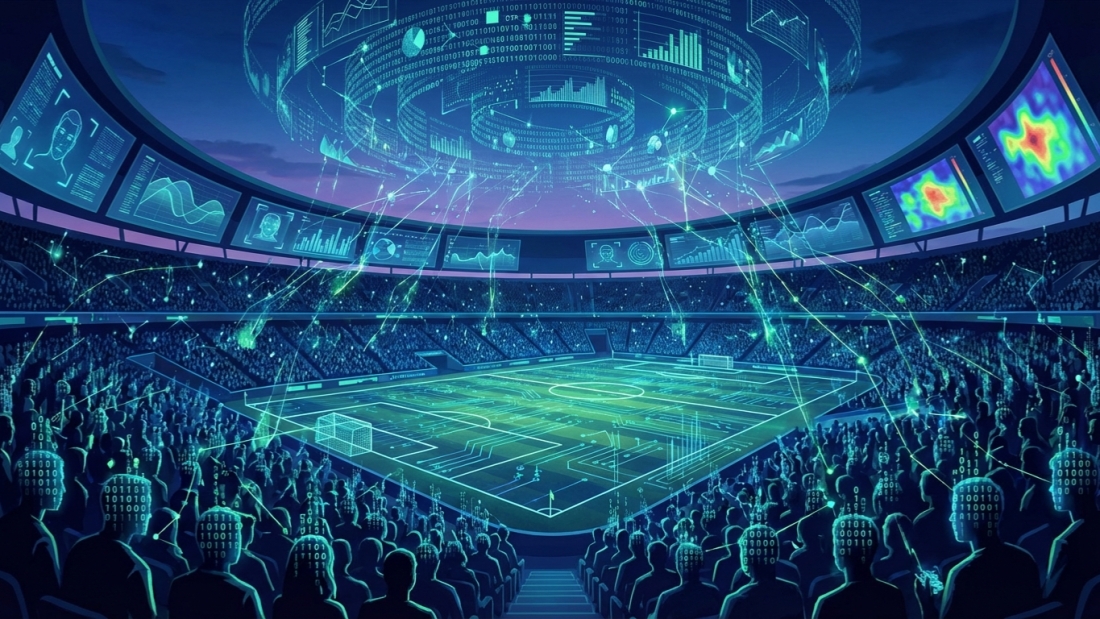
Across the sports world, it is only a matter of time before every attendee becomes an advanced data point. As technology advances and new stadiums are built, teams are deploying facial recognition, seat sensors, Wi-Fi tracking, and mobile app monitoring to transform fans from spectators into datasets. The justification is always the same: enhanced experience, better security, personalized service. The reality? You’re walking into the most surveilled entertainment experience in modern history, and most people have no idea it’s happening.
Welcome to the Intuit Dome, where your face is your ticket, your seat tracks how loud you cheer, and every movement you make gets logged, analyzed, and monetized. The LA Clippers’ new $2 billion arena isn’t just a basketball venue. It’s a data collection apparatus wrapped in premium hospitality. And it’s not an outlier—it’s the blueprint.
This isn’t about technology making sports better. This is about teams extracting maximum value from every interaction, every transaction, and every moment you’re in their building. And the privacy implications? Those are someone else’s problem.
Intuit Dome: The Case Study in Fan Surveillance
Steve Ballmer, former Microsoft CEO and Clippers owner, built Intuit Dome with a tech-first philosophy. The result is a venue where technology isn’t just integrated—it’s inescapable.
Facial Recognition: GameFace ID
Fans can opt into GameFace ID, which lets them enter the arena and buy concessions using only their face. Upload a selfie, link it to your ticket and payment method, and you’re set. The system can even infer if you’re over 21 from your selfie, enabling age-restricted purchases without an ID check.
The pitch: Seamless entry. No fumbling with your phone at the gate. Transactions in seconds.
The reality: Even if you don’t enroll, devices temporarily capture your image to check for matches. The privacy policy says this data is deleted if there’s no match, but you’re trusting the system to do what it says. And privacy experts note that facial recognition systems have higher error rates for darker skin tones, meaning marginalized communities bear disproportionate risk of misidentification.
Seat Sensors: Tracking Your Every Move
Each of the 17,927 seats has built-in sensors monitoring:
- How long you stay in your seat
- Decibel levels of your cheers
- Your location within the venue (via Bluetooth)
The sensors don’t record audio content, but they track enthusiasm. The loudest fans get rewards—discounts, upgrades, recognition. It’s gamification of fandom, with data as the scoreboard. Your seat also has armrest buttons for interactive games on the scoreboard, turning every break in play into an opportunity for data collection and engagement metrics.
The Mobile App: Your Digital Shadow
The official Intuit Dome app is central to the experience. It manages tickets, entry, concessions, and navigation. It also collects:
- Account information (name, email, payment methods, vehicle info)
- Location data (with user permission)
- Usage information (device type, IP address, pages viewed, time spent in app)
- Cookies and tracking technologies capturing browsing history
The app integrates with the loyalty program, tracking attendance, purchases, and engagement. Over time, it builds a comprehensive profile of your behavior, preferences, and spending patterns.
CCTV, ALPR, and “The Wall” Monitoring
Standard CCTV cameras throughout the venue capture photos and video for “safety and security.” The parking garage uses Automated License Plate Recognition (ALPR) to photograph vehicle plates for charging and surveillance. For fans in “The Wall” section—the dedicated super-fan zone—images from GameFace ID help determine if fans are wearing Clippers gear, which can lead to rewards in the loyalty program.
What It’s All Used For
Officially, the data serves several purposes:
- Personalization: Screens greet you by name. Offers tailored to your purchase history.
- Operations: Real-time analytics guide concession menu adjustments, staffing decisions, and crowd management.
- Security: Facial recognition and CCTV help identify threats and manage emergencies.
- Marketing: Collected data enables targeted ads, sponsor ROI tracking, and campaign optimization.
Unofficially? The data is an asset. It can be disclosed to service providers, the NBA, marketing partners, promotion sponsors, law enforcement, affiliated companies, and in corporate transactions. The privacy policy says they don’t “sell” data, but data can be “disclosed” in ways that amount to the same thing.
The Broader Trend: Smart Stadiums Everywhere
Intuit Dome is the most aggressive example, but it’s not alone. NFL, MLB, NBA, and international soccer venues are all deploying similar technologies:
Facial Recognition is Spreading: All 30 NFL stadiums now use facial recognition for credential verification for workers, press, and personnel accessing restricted areas. Citi Field, Mercedes-Benz Stadium, FirstEnergy Stadium, and others offer fan-facing facial authentication for entry and concessions. The Cleveland Browns reported an average entry time of 2 seconds per ticket using the Wicket system.
Seat Sensors and Crowd Analytics: Heat mapping and LiDAR sensors track crowd flow, identify bottlenecks, and optimize entry/exit management. Acoustic sensors create heat maps of crowd noise for engagement gamification.
Wi-Fi and Bluetooth Tracking: Venues offer free Wi-Fi to collect fan demographics, track movement patterns, and push location-based offers. Bluetooth beacons and RFID enable real-time location tracking and personalized navigation.
Mobile Apps as Data Hubs: Stadium apps track navigation paths, content engagement, purchase history, and social media interactions. They’re the central nervous system for fan data collection.
According to Verizon’s 2025 report, mobile data usage at NFL stadiums increased 37% over 2023, with video streaming accounting for 25% of all data use. Fans are heavily dependent on their devices, making them perfect vehicles for data collection.
The Justifications: Better Experiences and Enhanced Security
Proponents argue this technology creates tangible benefits:
For Fans:
- Shorter lines (facial authentication speeds entry and transactions)
- Personalized recommendations (the app suggests food based on past orders)
- Enhanced engagement (interactive experiences, AR/VR content)
- Improved safety (AI monitoring crowd behavior, identifying threats)
For Teams:
- Operational efficiency (real-time data guides staffing, inventory, and layout decisions)
- Revenue optimization (targeted promotions, dynamic pricing, sponsor ROI demonstration)
- Deeper fan relationships (personalized marketing campaigns, loyalty programs)
- Competitive advantage (data insights inform everything from concession menus to ticket pricing strategies)
Deloitte notes that richer fan data enhances sponsor opportunities by providing focused targeting and authentic engagement, leading to more customized advertising. The pitch sounds good. Seamless. Efficient. Safe. But there’s another side.
The Problems: Privacy, Bias, and Surveillance Creep
Lack of Informed Consent
Most fans have no idea the extent of data collection happening. Consent is buried in privacy policies that go unread. When you tap your phone to enter a stadium or connect to Wi-Fi, you’re agreeing to terms you didn’t read and wouldn’t fully understand if you did. New York City requires venues using facial recognition to provide disclosures to consumers, but many jurisdictions don’t. And even when disclosures exist, they’re ineffective if fans don’t know what they’re agreeing to.
Facial Recognition Errors and Bias
Studies show facial recognition technology is prone to errors and biased, particularly for people of color, women, children, and older individuals. Misidentification can lead to false accusations, wrongful detention, and humiliation. A Black woman misidentified as a security threat could be denied entry or detained, all because an algorithm made a mistake. And unlike a stolen credit card, a stolen face can’t be replaced.
Data Security Risks
Biometric data stored in massive databases is vulnerable to hackers and identity thieves. If a database is breached, your facial scan, fingerprints, or iris data could end up on the dark web. That’s not hypothetical—data breaches happen constantly.
Weaponization of Technology
Madison Square Garden used facial recognition to identify and ban lawyers representing plaintiffs in lawsuits against the venue’s owner. They weren’t criminals. They were attorneys doing their jobs. The technology was weaponized for “revenge and retribution,” raising chilling questions about how else it could be misused.
Normalization of Surveillance
Perhaps the biggest concern is that casual surveillance in stadiums normalizes surveillance everywhere else. If fans accept facial recognition at a game, why not at concerts, airports, grocery stores, schools? The erosion of privacy doesn’t happen all at once. It happens incrementally, with each new technology sold as convenient and safe.
The Regulatory Landscape: Fragmented and Insufficient
There’s no federal statute in the U.S. regulating biometric data collection. Some states—Illinois, Texas, Washington—have biometric privacy laws. Some cities, like Portland and New York, have specific regulations. But most jurisdictions don’t.
The EU AI Act introduces new compliance layers, designating certain remote biometric verification systems as “high-risk.” But enforcement is inconsistent, and venues often operate in regulatory gray zones. Venues using facial recognition should, at minimum:
- Implement robust cybersecurity programs
- Create and enforce data deletion policies
- Provide clear, conspicuous notice and obtain meaningful consent
- Train staff on technology limitations and bias
- Conduct regular audits to monitor efficacy and address issues
But many don’t. And there’s little consequence for those that fail.
What This Means for Fans
You’re not just a fan anymore. You’re a data point. And teams are building entire business models around extracting, analyzing, and monetizing that data. Here’s what you need to know:
1. Opting Out is Hard, But Possible: You can often disable location tracking in app settings, decline GameFace ID enrollment, and avoid connecting to venue Wi-Fi. But you can’t avoid CCTV, ALPR, or incidental facial capture. True privacy requires not attending.
2. Read Privacy Policies (or at Least Try): Most are deliberately dense, but knowing what data is collected and who it’s shared with is step one. Look for sections on biometric data, third-party sharing, and data retention.
3. Demand Transparency from Teams: Contact your team’s front office. Ask what data they’re collecting, how it’s used, who it’s shared with, and how long it’s retained. Public pressure works—but only if fans apply it.
4. Support Stronger Privacy Laws: Contact your representatives. Advocate for comprehensive biometric privacy regulations at the federal level. The current patchwork isn’t working.
5. Understand the Trade-Offs: Convenience comes at a cost. Faster entry is nice. Personalized offers are nice. But they’re not free. You’re paying with your privacy.
The Future: More Data, Less Privacy
The trend is clear: stadiums will collect more data, not less. AI and predictive analytics will get better. Facial recognition will become more accurate. Integration across platforms will deepen. Goldman Sachs predicts M&A activity will hit $3.9 trillion in 2026, with significant investment in sports tech and data infrastructure. Teams view fan data as a competitive advantage and a revenue driver. They’re not slowing down.
Smart stadiums are here to stay. The question is whether fans will demand accountability, transparency, and meaningful consent—or whether they’ll trade privacy for convenience without a second thought. Steve Ballmer built the Intuit Dome to “redefine the fan experience.” He succeeded. But the experience he’s created raises uncomfortable questions about surveillance, consent, and the commodification of fandom. The Data Stadium is the future. Whether that’s exciting or terrifying depends on how much you value your privacy.
Leave A Comment