

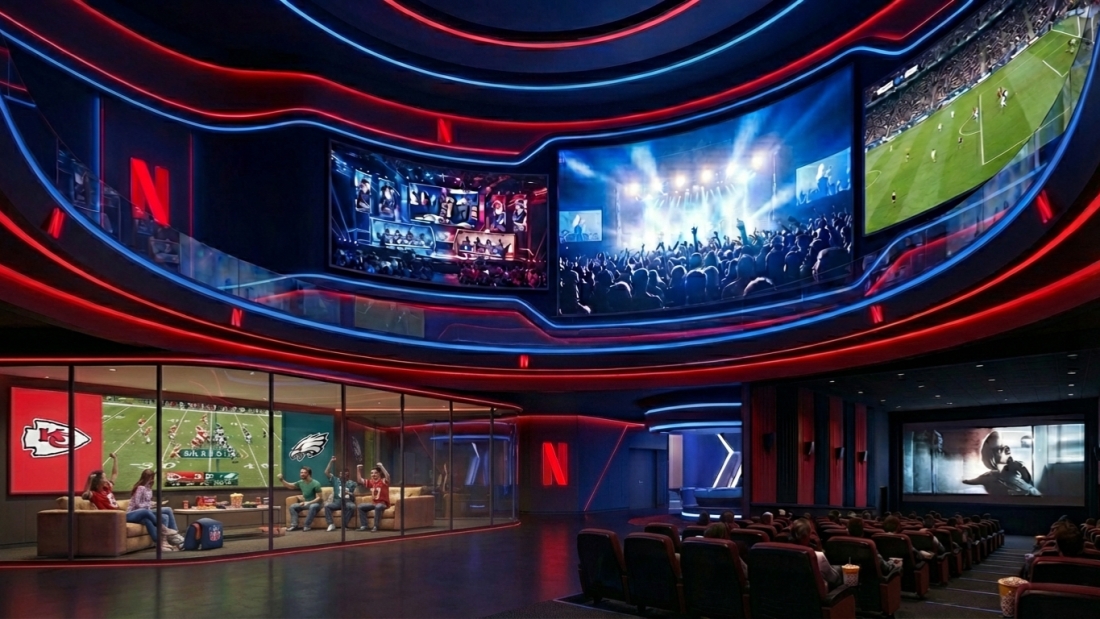
The bid heard around the entertainment world was submitted on December 5th: Netflix was acquiring Warner Bros. Discovery’s film studio and HBO Max for a staggering $82.7 billion. Wall Street buzzed. Hollywood reeled. Social media started the meme making. But before anyone could catch their breath, David Ellison’s Paramount Skydance threw a $108.4 billion grenade into the room—a hostile takeover bid for the entire Warner Bros. Discovery empire.
Now we’re watching the most consequential bidding war in entertainment history unfold in real time. Netflix versus Paramount. Streaming’s dominant force versus Hollywood’s scrappy underdog backed by sovereign wealth funds and Jared Kushner’s money. Ted Sarandos versus David Ellison. And somewhere in the background, Donald Trump is watching, waiting, and threatening to get involved. But while everyone’s busy dissecting this seismic battle, they’re missing the obvious follow-up question that’s staring us all in the face:
What if Netflix doesn’t stop there?
Regardless or whether Netflix wins the Warner Bros. deal, what is the endgame? What if the streaming giant that spent years positioning itself as the antithesis of traditional cinema is about to do the unthinkable and buy the world’s largest movie theater chain?
I’m talking about AMC Theatres. And before you dismiss this as pure speculation or strategic lunacy, hear me out. Because a Netflix-Warner Bros.-AMC trinity isn’t just plausible—it’s the kind of audacious vertical integration move that could redefine the entire entertainment industry for the next decade.
The Paramount Problem Makes AMC Even More Critical
Here’s what changed: Netflix thought it had a done deal. Then Paramount crashed the party with an all-cash offer that’s $18 billion more attractive to shareholders and includes all of Warner Bros. Discovery’s assets—the cable networks Netflix explicitly didn’t want. Paramount’s pitch is simple and devastating: We’ll release more than 30 films in theaters. We’ll protect the theatrical experience. We’ll be pro-cinema, pro-creative talent, pro-competition. Everything Netflix historically hasn’t been.
And that’s a problem.
Because if Paramount wins this bidding war, Netflix doesn’t just lose Warner Bros.—it loses the entire strategic rationale for becoming a traditional Hollywood power. It remains a streaming platform with great content but no physical footprint, no theatrical presence, and no answer to a newly supercharged Paramount-Warner Bros. behemoth that would control theatrical exhibition, premium cable, streaming, and one of the deepest content libraries on the planet.
But if Netflix wins? It faces a different challenge: proving to regulators, theater owners, filmmakers, and audiences that it won’t destroy the theatrical experience everyone assumes it hates.
Enter AMC Theatres—the ultimate insurance policy.
The Vertical Integration Dream: From Script to Screen to Seat
Let’s get one thing straight: the Warner Bros. acquisition was never just about content. Sure, Netflix now potentially owns a legendary studio with a century of filmmaking pedigree, the DC universe, the Harry Potter franchise, and HBO’s prestige television crown jewels. That’s huge. But content alone doesn’t complete the puzzle.
What Netflix has been chasing—what every major media player covets in the post-Paramount Decrees era—is complete control of the value chain. Production, distribution, and exhibition. The holy trinity of entertainment dominance that Walt Disney perfected decades ago through its studios, streaming service, and theme parks. Netflix now has production (Warner Bros.) and distribution (its platform). But it’s missing that crucial third pillar: a physical footprint where audiences gather, experience, and most importantly, pay.
Enter AMC Theatres—4,600 screens across the United States and internationally, the largest cinema chain on the planet. With approximately 200 million admissions annually and a captive audience that spends an average of $7-8 per visit on high-margin concessions, AMC represents something Netflix has never had: a tangible, in-person gateway to its content that generates revenue before anything hits the streaming platform.
This isn’t about Netflix suddenly loving movie theaters out of nostalgia. This is about creating a self-reinforcing ecosystem where every component amplifies the others. Warner Bros. produces the blockbuster. AMC gives it a theatrical run that builds cultural momentum and generates box office revenue. Netflix then rides that wave of hype to drive streaming engagement and subscriber growth. Meanwhile, Netflix’s algorithm targets its 260+ million global subscribers with laser-precision marketing for upcoming AMC releases, creating the most powerful promotional pipeline in cinema history. It’s the Disney playbook, but on steroids. And more importantly, it’s the perfect counter-narrative to Paramount’s “we love theaters” positioning.
The Paramount Threat Demands a Theatrical Response
David Ellison isn’t stupid. His entire pitch to regulators and shareholders rests on one argument: Paramount-Warner Bros. will champion theatrical exhibition while Netflix-Warner Bros. will kill it. He’s got evidence on his side. Netflix has spent years fighting exhibitors over theatrical windows, releasing films day-and-date on streaming, and treating theaters as an afterthought necessary only for awards consideration. Cinema United’s CEO called the Netflix-Warner Bros. deal an “unprecedented threat to the global exhibition business.” Theater owners are terrified. But what if Netflix could flip that narrative overnight?
Imagine Netflix announcing the AMC acquisition simultaneously with—or shortly after—closing the Warner Bros. deal. Suddenly, the story isn’t “Netflix is killing theaters.” It’s “Netflix is saving theaters by investing billions in the theatrical experience while Paramount just talks about it.”
The optics are transformative:
- To regulators: “We’re not consolidating to destroy competition—we’re vertically integrating to save a struggling industry.”
- To filmmakers: “Your movies will get proper theatrical releases in the largest chain in America, guaranteed.”
- To theater owners: “We’re not your enemy—we’re your new owner, and we’re bringing the biggest content pipeline in the world.”
- To Wall Street: “We’re diversifying revenue streams and creating a moat Paramount can’t match.”
It’s strategic judo. Paramount’s greatest weapon—the theatrical argument—becomes Netflix’s greatest asset.
The Revenue Goldmine: Beyond Tickets and Streaming Subscriptions
Let’s talk money, because that’s ultimately what makes or breaks these mega-deals. Critics will point to AMC’s challenges—and yes, they’re substantial. The company carries a crushing $4.02 billion debt burden, a legacy of pre-pandemic expansion and the industry-wide devastation of COVID-19. Its market cap sits at a modest $1.08 billion. On the surface, these are warning signs. But look deeper, and you’ll see something else: untapped potential waiting for the right owner to unlock it.
Movie theater concessions already operate at jaw-dropping profit margins—often exceeding 85%. That $20 combo of popcorn and soda? Almost pure profit. Now imagine Netflix weaponizing its IP to supercharge these sales. Stranger Things-themed popcorn buckets. Limited-edition Dune collectible cups tied to the Warner Bros. sequel. Specialty cocktails at premium AMC locations for HBO’s prestige dramas. We’re not talking about modest incremental gains; we’re talking about potentially doubling the average concession spend per patron by turning every theatrical visit into a branded experience.
Theatrical Windows That Actually Make Sense
The theatrical window debate has been Hollywood’s civil war for years, with streamers and exhibitors locked in perpetual conflict. Netflix acquiring AMC would end that war through sheer corporate consolidation. But more importantly, it would allow for the kind of strategic, data-driven windowing that the industry desperately needs.
Here’s the vision: Warner Bros. tentpoles—your Batman sequels, your DC universe films, your major franchise plays—get traditional 45-60 day theatrical runs. These are event films designed for the big screen, and they should maximize box office revenue while building the global cultural conversation.
Netflix gets the best of both worlds: theatrical box office and a massive streaming premiere that capitalizes on all that momentum. Meanwhile, Netflix Originals could operate on a flexible, experimental model. A prestige drama gets a limited run in select markets for awards positioning. A mid-budget thriller gets a targeted 26-day window to generate buzz before streaming. A niche international film goes day-and-date. Netflix would have the freedom to optimize each release based on the content, the audience, and the data—something no other studio can currently do because they don’t own the theaters.
And here’s the kicker: Paramount can’t do this. Even if Paramount wins Warner Bros., it doesn’t own theaters. It would still be negotiating with AMC, Cinemark, and Regal—all of whom would suddenly be dealing with a Netflix-owned competitor that controls the largest theatrical footprint in America.
The Experience Economy Play
But wait, there’s more. Movie theaters are fundamentally underutilized assets. Those auditoriums sit empty during weekday mornings and afternoons. That’s prime real estate begging for alternative revenue streams. Netflix could transform AMC into a multi-use entertainment hub:
- Live event broadcasts: Comedy specials shot live and simulcast to hundreds of AMC locations. Imagine a Dave Chappelle special where audiences can watch it live in theaters nationwide, creating a shared cultural moment while generating premium ticket revenue.
- E-sports tournaments and gaming events: Netflix is already making moves in gaming. Why not use AMC venues to host regional League of Legends tournaments or community gaming nights? The gaming and cinema audiences overlap more than you’d think.
- Private events and corporate rentals: Rent out auditoriums for corporate meetings, birthday parties, and community screenings. This is already a revenue stream for AMC, but Netflix could aggressively expand it, potentially generating tens of thousands in high-margin income per location annually.
- Immersive VR experiences: Set up VR stations in AMC lobbies where fans can experience Netflix’s content in new dimensions. Charge a premium for it.
The theater becomes more than a theater—it becomes a branded entertainment destination, a physical Netflix Store where IP comes to life.
The Bundle Nobody Saw Coming
Picture this: Netflix announces a “Netflix Cinema Pass” subscription tier. For $25/month, you get your standard Netflix streaming plus two AMC tickets and a discount on concessions. Suddenly, you’re not just retaining streaming subscribers—you’re driving incremental foot traffic to theaters, increasing concession sales, and creating a pricing tier that captures more consumer spending.
This kind of bundling is impossible when you don’t own both the streaming platform and the theaters. But Netflix-AMC could pioneer entirely new monetization models that blur the lines between subscription and theatrical exhibition. Paramount can’t offer this. Disney can’t offer this (they don’t own theaters). Nobody can offer this except Netflix—if they’re bold enough to pull the trigger.
Can Netflix Actually Afford This?
The skeptics are already sharpening their knives. “Netflix just spent $82.7 billion on Warner Bros.! And now they’re in a bidding war with Paramount! How can they possibly afford to buy AMC too?”
Fair question. Let’s run the numbers.
As of Q3 2025, Netflix carries approximately $14.46 billion in total debt, with a debt-to-equity ratio of 0.56—relatively healthy for a company of its scale. More importantly, Netflix has demonstrated consistent improvement in its financial resilience, with rising interest coverage ratios and growing cash flows. The Warner Bros. deal is massive, yes, but Netflix structured it carefully, and the market has reacted with cautious optimism.
Now, AMC’s enterprise value (market cap plus debt) sits around $5.1 billion ($1.08 billion market cap + $4.02 billion debt). That’s not cheap, especially when you factor in the debt assumption, but it’s also not insurmountable for a company of Netflix’s size and creditworthiness—particularly if Netflix successfully closes the Warner Bros. deal and demonstrates to capital markets that it can execute transformative M&A.
The financing playbook would likely involve:
- A combination of cash and stock to minimize immediate balance sheet impact
- Strategic debt refinancing for AMC’s existing obligations at better rates, leveraging Netflix’s stronger credit profile (AMC just completed a $1.6 billion refinancing in July 2025, extending maturities to 2029-2030)
- Structured earnouts tied to performance milestones to reduce upfront costs
- Timing the acquisition for after the Warner Bros. deal closes, allowing Netflix to demonstrate synergies and cash flow improvements before taking on additional debt
Would this lever up Netflix’s balance sheet? Absolutely. Would it require careful financial engineering and stakeholder management? No doubt. But is it feasible? Yes. And here’s the kicker: unlike many M&A deals where synergies are theoretical and integration is a nightmare, the strategic logic here is crystal clear. Netflix gains a physical footprint, diversified revenue streams, complete control over its content lifecycle, and a devastating competitive advantage over Paramount. AMC gets a lifeline—a well-capitalized owner with blockbuster content and a global marketing engine. The value creation potential is genuine, not PowerPoint fiction.
The Elephant in the Room: Antitrust and Regulation
Let’s not sugarcoat this—the biggest threat to a Netflix-AMC deal isn’t financial; it’s regulatory.
A Netflix that owns Warner Bros. and the largest theater chain in the world would be the most vertically integrated entertainment entity since the original studio system of the 1930s and 40s. The very system that the Paramount Decrees were designed to dismantle. And while those decrees have been officially terminated, the underlying antitrust principles of the Sherman and Clayton Acts remain very much alive. But here’s where the Paramount bidding war actually helps Netflix’s case.
The Department of Justice and the FTC are already scrutinizing both the Netflix and Paramount bids for Warner Bros. Trump has indicated he’ll be involved in the approval process, noting that Netflix’s market share “could be a problem.” Paramount is arguing that a Netflix-Warner Bros. combination would be anti-competitive because it merges the #1 and #3 streaming services.
Netflix’s counter-argument for acquiring AMC becomes: “We’re not creating a monopoly—we’re achieving parity with Disney, which already operates a vertically integrated empire spanning studios, streaming, and experiential retail. And we’re saving a struggling theatrical exhibition industry that Paramount claims to care about but won’t actually invest in.”
Moreover, Netflix could argue:
- AMC is financially distressed. A Netflix acquisition stabilizes the company and ensures continued investment in the theatrical experience.
- This creates more opportunities for diverse content. Strategic windowing means more films get theatrical releases, not fewer.
- We’ll commit to behavioral remedies. Netflix could guarantee to exhibit rival studios’ content fairly, maintain existing distribution agreements, and preserve theatrical windows for non-Netflix content.
Will regulators approve this? That’s the billion-dollar question. But it’s worth noting that even in today’s heightened antitrust environment, most vertical mergers ultimately get approved, often with conditions. It’s not impossible—it’s just hard. And if Paramount wins Warner Bros.? Netflix’s path to acquiring AMC becomes even clearer, because the competitive threat argument becomes overwhelming. “Paramount-Warner Bros. is now the dominant theatrical-streaming powerhouse. We need AMC to compete.”
The Cultural Risk: Can a Tech Company Run Movie Theaters?
Beyond regulation, there’s a softer but equally important question: Can Netflix, a Silicon Valley tech darling, actually operate a brick-and-mortar retail business? Netflix’s DNA is algorithms, data centers, and cloud-scale software. Its culture prizes remote work, experimentation, and rapid iteration. AMC, by contrast, is physical real estate, local labor management, supply chain logistics, and the unglamorous grind of maintaining thousands of aging buildings. The operational gulf is vast.
This is where the rubber meets the road—or rather, where the digital platform meets the sticky theater floor. Running a cinema chain profitably requires competencies Netflix has never needed: negotiating real estate leases, managing unionized workforces in multiple jurisdictions, optimizing physical inventory for concessions, maintaining HVAC systems, and navigating the complex dance of film distribution with rival studios.
These are execution risks that can’t be modeled away. They require experienced operators, cultural adaptation, and a willingness to embrace a business model with far lower margins and far more physical headaches than streaming.
That said, Netflix has consistently proven itself to be a learning organization. They entered content production as a tech company and became a studio powerhouse. The firm expanded globally despite having no traditional broadcast infrastructure and now built a gaming division from scratch. The company’s track record suggests it can adapt to new challenges—but there’s no guarantee, and the cost of failure here would be measured in billions.
The smart play? Retain AMC’s existing management team, give them autonomy and resources, and integrate strategically rather than attempting a full cultural overhaul. Let the theater operators run theaters. Let Netflix provide content, marketing, technology, and capital. Create a hybrid model that respects both cultures.
The Bigger Picture: Winning the War, Not Just the Battle
Step back from the financial modeling and regulatory hurdles for a moment, and consider the macro strategic landscape. Netflix is in a fight for its life—not for survival, but for dominance.
If Paramount wins Warner Bros., the entertainment industry realigns around a new axis:
- Paramount-Warner Bros.: Studios + Streaming + Theatrical Commitment + Cable Networks
- Disney: Studios + Streaming + Theme Parks
- Netflix: Streaming + Originals + … what?
Netflix becomes the odd one out—a powerful platform with great content but no physical presence, no theatrical strategy, and no answer to vertically integrated competitors.
But if Netflix wins Warner Bros. and acquires AMC, the landscape looks radically different:
- Netflix: Studios (Warner Bros., HBO, Netflix Originals) + Streaming (Netflix Platform) + Theatrical (AMC Theatres)
- Disney: Studios (Disney, Pixar, Marvel, Lucasfilm) + Streaming (Disney+, Hulu) + Experiential (Theme Parks, Resorts)
- Paramount-Warner Bros. (if Paramount loses): Scrambling to catch up
Everyone else—Paramount (if they lose), NBCUniversal, Sony—would be playing catch-up, scrambling to achieve similar scale and integration or risk irrelevance. The competitive dynamic would shift from a streaming war to an all-out battle for total entertainment dominance across every consumer touchpoint.
This duopoly would reshape how content is created, distributed, and monetized. It would likely accelerate the decline of traditional theatrical windows for non-tentpole films, push smaller studios and independent filmmakers toward niche platforms, and concentrate enormous cultural power in the hands of two corporations.
Is that good for consumers? That’s a nuanced question. On one hand, these companies have the resources to create spectacular, high-budget content and experiences that delight audiences. On the other hand, oligopolies tend to reduce diversity, increase prices, and limit consumer choice over time. But from a pure business strategy perspective, it’s logical. It’s the natural evolution of an industry that’s been in upheaval for over a decade. And Netflix, having already made the bold move to pursue Warner Bros., would be foolish not to at least consider completing the trifecta.
The Case for Boldness
So here we are, in the middle of one of the biggest entertainment battles in history, and I’m arguing that Netflix should immediately start planning an even more audacious move. Why? Because momentum matters. Paramount just made this fight existential and half-measures don’t win wars. Netflix has already crossed the Rubicon. It’s already committed to becoming a traditional Hollywood power. It’s already accepting the regulatory scrutiny, the cultural integration challenges, and the financial risk. Adding AMC to the equation doesn’t fundamentally change the nature of the bet—it completes it.
Acquiring AMC would give Netflix something no other streaming platform has: a guaranteed, premium venue for its content and a physical relationship with consumers that extends beyond the screen. It would create revenue diversification at a time when subscriber growth is plateauing. It would provide a defensive moat against Disney’s experiential dominance and Paramount’s theatrical positioning. And it would signal to Hollywood, Wall Street, and audiences that Netflix isn’t just playing the game—it’s rewriting the rules. Will it happen? That’s impossible to predict. The regulatory hurdles are real. The operational risks are significant. The financial commitment is enormous. And first, Netflix has to win the Warner Bros. bidding war against a well-funded, politically connected Paramount that’s playing for keeps.
But if you’d told me six months ago that Netflix would spend $82.7 billion to acquire Warner Bros., and that Paramount would counter with a $108.4 billion hostile bid backed by Saudi sovereign wealth funds and Jared Kushner’s investment firm, I would have laughed you out of the room. And yet, here we are. The old Hollywood is dying. A new one is being born in a bidding war that’s redefining the industry in real time. And if Netflix wants to be the architect of that future rather than just a participant—if it wants to win not just this battle but the entire war—buying AMC Theatres isn’t just a smart move.
Leave A Comment