

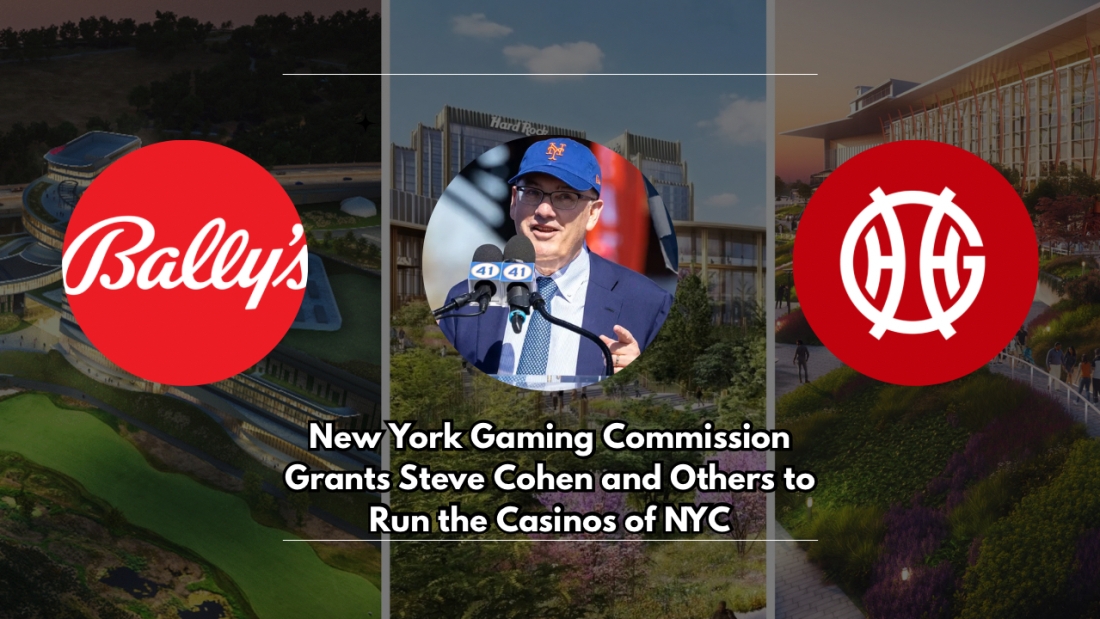
Steve Cohen just pulled off what might be his biggest win outside of baseball. New York’s Gaming Commission handed out three historic licenses for the first full-scale casinos in NYC, and Cohen’s $8 billion Metropolitan Park project with Hard Rock International made the cut. We’re talking about turning 50 acres of asphalt parking near Citi Field into something that could change Queens forever. Bally’s Bronx and Genting Group’s Resorts World in Queens also snagged these coveted licenses cementing the three massive casino projects hitting NYC simultaneously. The Gaming Commission’s decision is one that is going to change NYC’s entertainment game forever. Full-scale casinos operating legally within city limits? It has never been done. This isn’t just about rolling dice and pulling slots – we’re looking at a complete shift in how New York approaches economic development.
Thinking strategically – these casino licenses are about way more than just gambling permits. New York needed something big after the pandemic hammered the city’s finances, and these projects could be exactly what the doctor ordered. We’re not just talking about tax revenue here, we’re talking about a complete economic reset. The employment angle is massive and these developments plan to turn dead zones into entertainment districts. Hotels, restaurants, retail spaces, performance venues – each project is basically building a mini-city within the city. New York has been cities such as Las Vegas and Atlantic City rake in tourism dollars for decades. These integrated resorts could add that persona to the Big Apple. Why fly to Vegas when you can get the similar experience in Queens?
Metropolitan Park alone is promising over 17,100 direct construction jobs, plus another 6,081 permanent positions and 2,077 part-time gigs. Those are serious numbers for a city that’s been hungry for this kind of economic boost. The money involved here is staggering. Metropolitan Park is projecting $33.5 billion in new tax revenue over thirty years, with $6.6 billion in annual economic impact once it’s running. Construction kicks off January 2026, with everything supposed to be ready by June 2030. Cohen’s betting big on this one, and frankly, the timing is very interesting to all New Yorkers.
How the final three were selected
The selection process wasn’t just throwing darts at a board. The Gaming Commission had to sift through multiple proposals, weighing economic impact, community benefits, and whether these developers could actually pull off what they were promising. What separated the winners from the losers? Experience matters. Steve Cohen didn’t just wave around his Mets money – he partnered with Hard Rock International, a company that knows how to run casinos. Bally’s and Genting Group brought their own proven track records to the table.
The commission wasn’t interested in just building gambling halls. Metropolitan Park’s 50-acre transformation of the Citi Field parking area caught their attention because it went beyond gaming floors. Smart move by Cohen’s team. Geography played a role too. Why put all three casinos in Manhattan when you can spread the economic love around? Metropolitan Park near Citi Field, Bally’s in the Bronx, Resorts World in Queens – different neighborhoods, different communities benefiting.
But here’s what really sealed the deal: community support. Each winning project had to prove local residents actually wanted them there. In a city where NIMBYism can kill any development, getting that public backing was absolutely critical.
Inside the Three Winning Casino Projects
Each of these three casino projects brings something different to the table, and honestly, they couldn’t be more distinct in their approaches. You’ve got Cohen’s grand vision, Bally’s ambitious timeline, and Genting’s expansion play.
Metropolitan Park near Citi Field
Steve Cohen isn’t just building a casino – he’s creating an empire right next to his ballpark. The 50 acres of parking lots around Citi Field will become a complete entertainment district, designed by SHoP Architects and Field Operations. We’re looking at 5,000 slot machines and 375 table games, plus a luxury hotel, convention center, and live music venue. The politics behind this one have been smooth sailing. Unanimous approval from its Community Advisory Committee, and the New York City Council voted 41-2 in favor. That’s the kind of support you need for an $8 billion project. Metropolitan Park will generate over 6,000 permanent jobs, and Cohen’s team has pledged $1 billion in community benefits, including transportation improvements.
Bally’s Bronx at Ferry Point Park
Bally’s took a different route – they’re working with 16 acres at Ferry Point Park, land they picked up from the Trump Organization in 2023. Their vision includes a 500,000-square-foot gaming hall and a 500-room hotel. The job numbers here are impressive: 15,000 union construction jobs and 4,000 permanent union positions. Bally’s committed $625 million toward community benefits – transportation upgrades, park improvements, and public safety enhancements. But it hasn’t been all smooth sailing. Local Council Member Kristy Marmorato opposed the project, which tells you the political landscape isn’t uniform across the boroughs.
Genting Group’s Resorts World in Queens
Genting has the advantage of already being in the game. They’re expanding their existing facility at Aqueduct Racetrack with a $5.5 billion investment. Right now, they’re NYC’s only casino with over 5,800 slot machines and electronic table games. The expansion means 5,000 permanent jobs and over $1 billion yearly in tax revenue. Here’s what makes Genting different – they could have live table games running within months of approval. That’s a massive head start over the competition. They’re adding 1,600 hotel rooms to their current 400-room Hyatt Regency. When it’s done, this 350,000-square-foot casino will be among America’s largest. The smart money says Genting has the easiest path to immediate revenue, while Cohen’s playing the long game with the biggest potential payoff.
We congratulate @BallysCorp, @QueensFutureNYC – @HardRock Metropolitan Park, and @ResortsWorldNYC on being recommended for downstate casino licenses by the State Gaming Facility Location Board.
— New York Building Congress (@bdgcongress) December 1, 2025
We look forward to working with our members to bring these world-class developments… pic.twitter.com/2gTK0rBKXs
🚨NYC Casino Licenses Awarded: The $19.5B Landscape Shift
— Karol Kozicki (@k2__investment) December 1, 2025
The NY Gaming Commission has officially selected its three operators for the downstate casino licenses. This concludes a multi-year race, unlocking billions in CapEx and tax revenues.
Here are the winners:
1. Resorts… pic.twitter.com/m1yanJdffd
Projected tax revenue and job creation
From the ouside looking in – over $17.5 billion in total investment across Queens and the Bronx sounds incredible on paper. But what does this massive influx of capital actually mean for everyday New Yorkers? The promise is substantial economic returns, but it comes with legitimate concerns that deserve serious attention.
The state’s expecting at least $1.5 billion in upfront licensing fees from these three casinos. That’s before they even open their doors. Once operational, the state will collect at least 25% on slot gaming and 10% on all other gaming revenue. Those are serious percentages that could fund a lot of public projects.
Here’s where the job numbers get interesting:
Combined permanent jobs: approximately 15,500 positions
Total construction jobs: around 75,500 direct and indirect positions
Median wage at Bally’s: $62,400 annually
Resorts World alone estimates it will generate $2 billion in education tax revenue during its first four years. But here’s the thing – a state comptroller report cautioned that “local gaming revenue is not always a ‘sure bet'”. Smart money says we should manage our expectations. These aren’t just gambling halls. Each project promises hotels, restaurants, and event spaces that could genuinely boost tourism.
The question is: will this actually help existing local businesses, or hurt them? Jonathan Krutz made a crucial point: “The revenue going into casinos, by and large, comes locally”. Think about it – if someone spends $200 at a casino, that’s potentially $200 they’re not spending at local restaurants, shops, or entertainment venues. This “substitution effect” means casinos might just be moving money around instead of creating new wealth. The economic benefit really happens when casinos hire unemployed people rather than poaching workers from other businesses. Will these projects actually create new opportunities, or just shuffle the deck? (no pun intended.)
Concerns about crime and gambling addiction
Adding to the other potential downside of these projects breaking ground is personal impact additional to the economic impacts. Communities near these proposed sites aren’t staying quiet about their worries. It wont all be fun ang games as many are worried about increased crime, traffic nightmares, and gambling addiction. We already told you gambling was this generations crack epidemic and it is only getting more intense.
The state has set up responsible gaming measures through the NY Council on Problem Gambling, and the budget includes provisions for addiction treatment. But, we all know those will not suffice and these addictions are very powerful. Some neighborhoods fear these casinos might target vulnerable populations, and research backs up their concerns – proximity to casinos increases poverty rates over time, especially in disadvantaged areas. How do you balance the promise of economic growth with the real risk of harming the communities these projects claim to help? That’s the question New York needs to answer honestly before the first shovel hits the ground.
What Comes Next for the Casino Developments
Getting these licenses was the easy part. Now comes the real work, and each developer has a mountain of requirements to tackle before anyone can roll dice or pull slots. Metropolitan Park will break ground in January 2026. Steve Cohen’s massive project is shooting for a June 2030 completion date. That’s when visitors will finally get their hands on the Hard Rock casino experience right next to Citi Field. Resorts World is moving fastest. They’re planning to add table games by July 2026, just months after getting final approval. Their full $5.5 billion expansion wraps up by 2030. Bally’s Bronx is cutting it close. Their host city agreement demands they open by September 2026. Problem is, their own projections point to a fourth-quarter opening that same year. That’s a tight window.
Each casino has to deliver serious community packages:
- Metropolitan Park established a $163 million trust for local nonprofits
- Bally’s committed $17 million for local officials to fund chosen projects
- Resorts World pledged $2 billion in community benefits
The money’s just part of it. Resorts World will create a center for youth sports. Metropolitan Park is promising a 25-acre public park. These aren’t just casino developments – they’re supposed to be community investments. First, the New York State Gaming Commission needs to verify each winner’s financial stability. Next, each operator must cough up their $500 million license fee by December 31. Developers also have to submit a 5-10% deposit of their total project investment. On top of that, they must commit at least $500 million in capital investments to their areas. Finally, the state will collect gaming tax revenue at minimum rates of 25% on slots and 10% on table games. The regulatory hurdles are real, but so is the potential payoff for everyone involved.
The Gamblers of New York
New York City is about to find out if this casino gamble pays off. These three approved projects represent the biggest shift in NYC’s entertainment landscape since… well, maybe ever. We’re looking at $17.5 billion in total investment hitting Queens and the Bronx simultaneously.
Steve Cohen’s Metropolitan Park clearly dominates this conversation. His $8 billion vision for those Citi Field parking lots could either be genius or massively expensive mistake. The $33.5 billion in new tax revenue projections over thirty years sound impressive, but let’s be honest – projections thirty years out are about as reliable as weather forecasts.
The job creation numbers tell a compelling story. Thousands of construction gigs, thousands of permanent positions, decent wages at most of these spots. That matters for neighborhoods that have been waiting decades for this kind of economic opportunity. Each developer talks a good game about community safeguards, but we’ve seen how that works out in other cities. Resorts World moving fastest makes sense – they’re already operating, just expanding what they have. Bally’s faces the tightest timeline in the Bronx, and tight timelines in construction usually mean corners get cut somewhere.
What I find interesting is how much community investment each project promised. Metropolitan Park’s $163 million trust, Bally’s $17 million for local projects, Resorts World’s $2 billion in community benefits. Those aren’t small numbers, and if they follow through, these neighborhoods could see real improvements beyond just casino jobs. The bottom line? New York waited this long for legal casinos, and now they’re getting three at once. It’s either going to be a massive success story or a cautionary tale about moving too fast on too many big bets. We’ll know which one by 2030.
Leave A Comment