

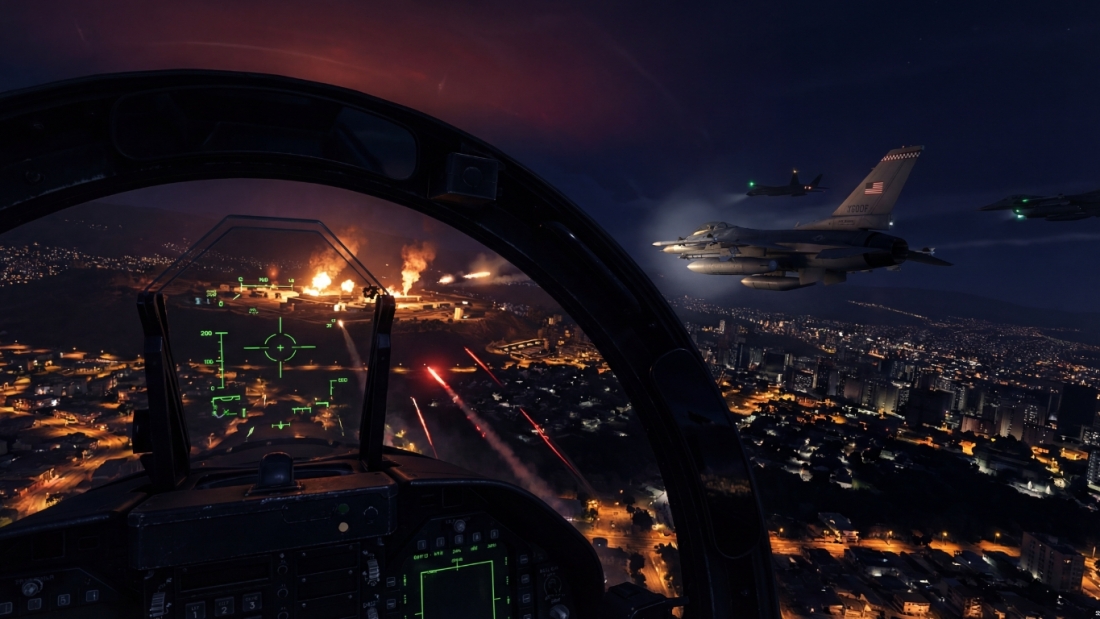
Let’s cut through all of the propaganda for a second. On January 3, 2026, the United States military launched “Operation Absolute Resolve”—over 150 aircraft, special operations forces, and a full-scale invasion of Venezuela that resulted in the capture of President Nicolás Maduro. The official story? We were taking down a “narco-terrorist state.” The Trump administration dusted off a 2020 federal indictment, called Maduro the head of the “Cartel of the Suns,” and told us this was about saving American lives from the drug crisis. What a way to start off the year.
But here’s what they’re not saying loud enough: President Trump himself declared the U.S. would “run” Venezuela and immediately announced plans to bring in American oil companies to take over the country’s energy sector. Not to liberate the Venezuelan people. Not to spread democracy. To control the oil. Welcome to the new era of American foreign policy, where “national security” is code for “resource grab,” and where the real war isn’t about freedom—it’s about who controls the chessboard in the escalating economic showdown between the United States, China, and Russia.
Why Venezuela? Why Now?
Let’s be real: there are plenty of dictators around the world. Plenty of authoritarian regimes. Plenty of human rights abusers. So why did the U.S. suddenly decide that Maduro—right now—was such an urgent threat that it required a full military invasion without Congressional approval? The answer isn’t in Washington’s press releases. It’s buried in the ground beneath Venezuela’s feet.
Venezuela sits on the world’s largest proven oil reserves—303.2 billion barrels. That’s not a typo. That’s more than Saudi Arabia. More than Iran. More than Canada. It represents roughly 17% of all proven oil reserves on Earth. This is the single most valuable strategic resource on the planet that isn’t already under U.S. or allied control. And for the past two decades, that oil has been bankrolling alliances with America’s two biggest geopolitical rivals.
The China and Russia Problem
Here’s where the story gets interesting. Since the mid-2000s, China has poured over $100 billion in loans into Venezuela in exchange for guaranteed oil shipments—classic “oil-for-loans” deals that secured energy supplies for the world’s largest oil importer while giving Beijing a strategic foothold in America’s backyard. Venezuela became a key component of China’s energy diversification strategy, an insurance policy against U.S. control over global shipping lanes.
Russia, meanwhile, sold billions in military hardware to Caracas, invested heavily in joint oil ventures, and used its UN Security Council veto power to shield Maduro from international pressure. For Moscow, Venezuela was a low-cost way to project power into the Western Hemisphere and stick a thumb in America’s eye. The U.S. has been watching this alliance deepen for years, watching China and Russia gain influence over a resource-rich nation just hours from the U.S. mainland. Trump himself invoked the Monroe Doctrine, declaring Venezuela is “in our area” and needs to be brought “back.” Translation: Get out of our hemisphere. This oil is ours now.
The “Narco-Terrorism” Smokescreen
Don’t get it twisted—Maduro’s regime was corrupt. The drug trafficking allegations? Probably true. Venezuela under his rule became a failed state, and the humanitarian crisis was real. But let’s not pretend that’s why Delta Force stormed Caracas at 2 a.m. The narco-terrorism indictment is the legal justification, but it’s not the strategic motivation. It’s the cover story that allows the U.S. to bypass Congress entirely. By framing this as a “law enforcement operation” rather than an act of war, the administration avoided the messy constitutional requirement of getting Congressional approval for military action. Senator Mike Lee argued the President was simply “protecting those executing a valid arrest warrant”—a creative interpretation of executive power that sets a terrifying precedent.
If this was really about fighting drugs, why aren’t we invading every other narco-state? Why not launch special ops raids in parts of Mexico controlled by cartels? Why not go after other corrupt leaders trafficking narcotics? Because those countries don’t have 303 billion barrels of oil and strategic value in a great power competition. The indictment gives the operation a veneer of legality. It lets officials stand in front of cameras and say, “We’re just enforcing the law.” But make no mistake—this is imperialism with a federal warrant.
Natural Resource Sovereignty: The End Game
Let’s zoom out for a second and look at what’s really happening here.
This isn’t about spreading democracy. This is about resource control in an era of renewed great power competition. The U.S. isn’t acting as the world’s police force—it’s acting as a global resource empire, using military force to secure strategic assets and deny them to rivals.
As Trump openly stated, the plan is for American oil companies to rebuild Venezuela’s collapsed energy infrastructure and essentially run the industry. The administration framed this as a win-win: Venezuela gets a functioning oil sector again, the U.S. gets access to massive reserves, and American taxpayers don’t foot the bill because it’ll all be paid for with future oil revenues. Sounds great, right?
Except that this completely obliterates the concept of national resource sovereignty—the principle that a nation’s natural resources belong to its people and should be controlled by its government, not foreign powers. It’s the same logic that justified colonialism: “You can’t manage your own resources properly, so we’ll do it for you.” Venezuela’s oil industry did collapse under Maduro. Production plummeted from over 3 million barrels per day in the 1990s to around 921,000 bpd by 2024—a staggering 70% decline. Corruption, mismanagement, and underinvestment destroyed what was once a world-class energy sector.
But here’s the uncomfortable question: does the failure of one government to manage resources justify a foreign military invasion to seize control of those resources? Because if the answer is yes, that opens the door to a very dangerous world.
Potential Conflict Over Taiwan
Now here’s where the plot thickens. Venezuela isn’t just about oil for oil’s sake. It’s about positioning for a potential conflict with China over Taiwan. Think about it: if the U.S. and China go to war over Taiwan, what happens? The Strait of Malacca gets blockaded. Asian sea lanes shut down. Global energy markets collapse. Oil prices skyrocket. The U.S. military machine needs fuel, and so does the American economy.
By securing Venezuela’s 303 billion barrels, the U.S. gains a massive, geographically proximate energy buffer that’s completely insulated from any Indo-Pacific conflict. It’s an insurance policy for World War III.
At the same time, it’s a direct blow to China’s energy security. Venezuela was a critical part of Beijing’s strategy to diversify oil supplies away from Middle Eastern sources that pass through U.S.-controlled chokepoints. China had been settling oil purchases from Venezuela in yuan, not dollars—a direct challenge to the petrodollar system that underpins American economic dominance.
Now that oil is under U.S. control. Sure, Trump said China can still buy it, but on America’s terms, not as a strategic partnership with a friendly regime. This is “Monroe Doctrine 2.0″—securing the Western Hemisphere before potentially engaging in a two-theater great power conflict. It’s about making sure the U.S. home front is locked down before the real fight begins in Asia.
Why Russia & China Are Furious
Both China and Russia immediately condemned the operation as a violation of international law and an act of aggression. Beijing called it a “hegemonic act.” Moscow demanded Maduro’s release. The UN Secretary-General said he was “deeply alarmed.” But the real reason they’re pissed isn’t about international law or Venezuelan sovereignty. They’re pissed because they lost.
For two decades, China and Russia cultivated Venezuela as a strategic ally in the Americas. They invested billions, provided diplomatic cover & built economic dependency. And in one night, the U.S. wiped it all out with overwhelming military force. The message is clear: your economic partnerships mean nothing if we decide to act. Your investments aren’t safe. Your proxies can’t be protected. This isn’t just about Venezuela. It’s a demonstration of raw American power and a warning shot to Beijing and Moscow: we will use military force to secure our interests, and there’s nothing you can do about it.
It’s also a massive strategic loss for them. China’s $100 billion in loans? Now subject to renegotiation with whatever U.S.-friendly government gets installed. Russia’s military sales and oil joint ventures? Dead. Their leverage in the Western Hemisphere? Obliterated. In the zero-sum game of great power competition, the U.S. just scored a major victory—and it came at the direct expense of its rivals.
This is wild...
— John LeFevre (@JohnLeFevre) January 3, 2026
Two months ago: Russia ratified a treaty to defend Venezuela.
Yesterday: China’s Special Envoy reaffirms "unbreakable brotherhood with Venezuela."
This morning: Crickets pic.twitter.com/DVPKCvgSHh
🇻🇪🛢️Venezuela holds the world's largest proven oil reserves, estimated at about 303 billion barrels, mostly concentrated in the Orinoco Belt.
— Visioner (@visionergeo) January 3, 2026
🔹 However, due to sanctions and faulty infrastructure, the extraction rate is much lower than its potential. Additionally, the high… pic.twitter.com/MLDvT5OKU7
The Dangerous Precedent: Who’s Next?
Here’s what should terrify you about this operation. If the U.S. can invade a sovereign nation, arrest its head of state, and justify it with a domestic criminal indictment and claims of “narco-terrorism,” then what’s to stop other powers from doing the same?
China has already been watching closely, with some analysts warning that Beijing could cite this precedent to justify its own actions against Taiwan. Russia, which has its own history of military interventions justified by “protecting” people or fighting “terrorism,” now has fresh ammunition for its propaganda machine.
The U.S. has essentially normalized the idea that powerful nations can ignore international law and sovereignty when it suits their strategic interests. We’ve Putinized our foreign policy—the very thing we’ve spent decades condemning. And domestically? This sets a precedent for executive power that should alarm everyone regardless of political affiliation. The ability to launch a full-scale military invasion without Congressional approval, justified as “law enforcement,” is a massive expansion of presidential authority. Today it’s Venezuela. Tomorrow, who knows?
The Bigger Picture: Trade War Goes Kinetic
Let’s connect all the dots. For years, the U.S. has been engaged in an escalating economic conflict with China—tariffs, sanctions, tech restrictions, financial warfare. The U.S. sanctioned Venezuela’s state oil company PDVSA in 2019, cutting it off from American markets and forcing Venezuela to sell oil at steep discounts to China and India, often using a “shadow fleet” of tankers to evade restrictions.
Venezuela became a laboratory for economic warfare and sanctions evasion. It was where China and Russia tested alternatives to the dollar-dominated financial system, where oil trades were settled in yuan instead of dollars, where cryptocurrencies like Tether became a workaround for frozen banking systems. The Venezuela operation is the moment the economic war went kinetic. When sanctions and financial pressure couldn’t achieve U.S. objectives, the military stepped in. It’s a clear signal: economic tools are just the opening move. If they don’t work, we’ll use force. This fundamentally changes the nature of great power competition. It’s not just about tariffs and trade deals anymore. It’s about who controls the physical resources that power the global economy, and a willingness to use military force to secure them.
So Who Really Benefits?
Let’s get the critical thinking questions out of the way:
Who benefits most from this operation?
- American oil companies, who just got handed a devastated but resource-rich energy sector to rebuild and profit from
- The U.S. national security establishment, which eliminated a rival-backed regime in its backyard
- Defense contractors, who just sold the American public on why we need overwhelming military superiority
- The petrodollar system, which was being challenged by yuan-denominated oil sales
Who loses?
- The Venezuelan people, whose national resources are now under foreign control regardless of what new government gets installed
- China and Russia, who lost billions in investments and a strategic ally
- International law and the concept of sovereignty, which just took a huge blow
- American constitutional norms, which were bypassed by framing an invasion as “law enforcement”
The Uncomfortable Truth
Let’s not kid ourselves. The U.S. didn’t invade Venezuela to install a truly independent, sovereign government that will make its own decisions about its natural resources. The whole point was to prevent exactly that kind of independence. Whatever government emerges—whether it’s the opposition leaders María Corina Machado and Edmundo González or some transitional authority—it will be heavily influenced by Washington. The oil contracts will favor American companies. The political alignment will be pro-U.S. The economic policies will integrate Venezuela into the U.S. sphere rather than the China-Russia orbit. That’s the whole point.
Here’s what the mainstream media won’t tell you: This operation was rational from a great power competition perspective. If you accept the premise that the U.S. is in an existential economic and strategic struggle with China and Russia, then controlling Venezuela’s oil reserves makes perfect strategic sense. It denies resources to rivals, secures energy for potential conflict, and reasserts hemispheric dominance.
But “strategically rational” doesn’t mean “morally right” or “legally justified.” The uncomfortable truth is that the United States just demonstrated it will use overwhelming military force to secure resources and strategic advantage, international law be damned. We’ve entered an era where great powers are willing to act unilaterally, where economic competition can quickly escalate to military action, and where the veneer of humanitarian concern barely masks raw resource imperialism.
The “narco-terrorism” narrative is the story they tell to sell it domestically. The trade war and resource competition is the reality.
Venezuela’s 303 billion barrels of oil aren’t a gift from God to the Venezuelan people—they’re a prize in a new great game, and the U.S. just claimed it.
The Questions We Should Be Asking
So here’s what should keep you up at night:
- If resource control justifies military invasion, where does it stop? The Congo has minerals essential for batteries and tech. Should the U.S. invade there too if China’s influence grows? What about rare earth deposits in other countries?
- If a domestic indictment can bypass Congress for military action, what are the limits on presidential war powers? Can any future president launch an invasion as long as the Justice Department issues an indictment first?
- If sovereignty can be overridden for “narco-terrorism,” what about cyber-terrorism? Or election interference? Or human rights? Who decides which violations justify military intervention?
- And most importantly: what happens when China or Russia use this exact same playbook?
The Maduro capture wasn’t about spreading democracy. It wasn’t really about fighting drugs. It was about securing a strategic resource in an escalating great power competition, using whatever legal justification was convenient. Welcome to the new world order. It looks a lot like the old imperial order, just with better PR.
Think we’re off base? Got a different take? DM us on any platform—Animal House USA is here to start conversations, not shut them down. Share this if it made you think. Bookmark our website if you want more uncomfortable truths.
Leave A Comment