

The NBA is coming off the kind of weekend that reminds everyone why the league can be so great. Three Game 7s. High stakes. Real tension. Teams fighting for every possession like the season depended on it — because it did. That is the product fans want. That is the version of the NBA that feels alive. And that’s exactly why the league’s latest anti-tanking proposal is understandable.
Because while the top of the NBA has been incredibly competitive, the bottom of the league has become almost impossible to defend. There’s a major difference between rebuilding and being outright noncompetitive. Fans can accept a young team taking its lumps while developing players. What’s harder to accept is watching organizations spend the second half of the season seemingly more invested in lottery position than winning basketball games. That is the problem Adam Silver and the NBA are trying to solve.
The “3-2-1” System Explained
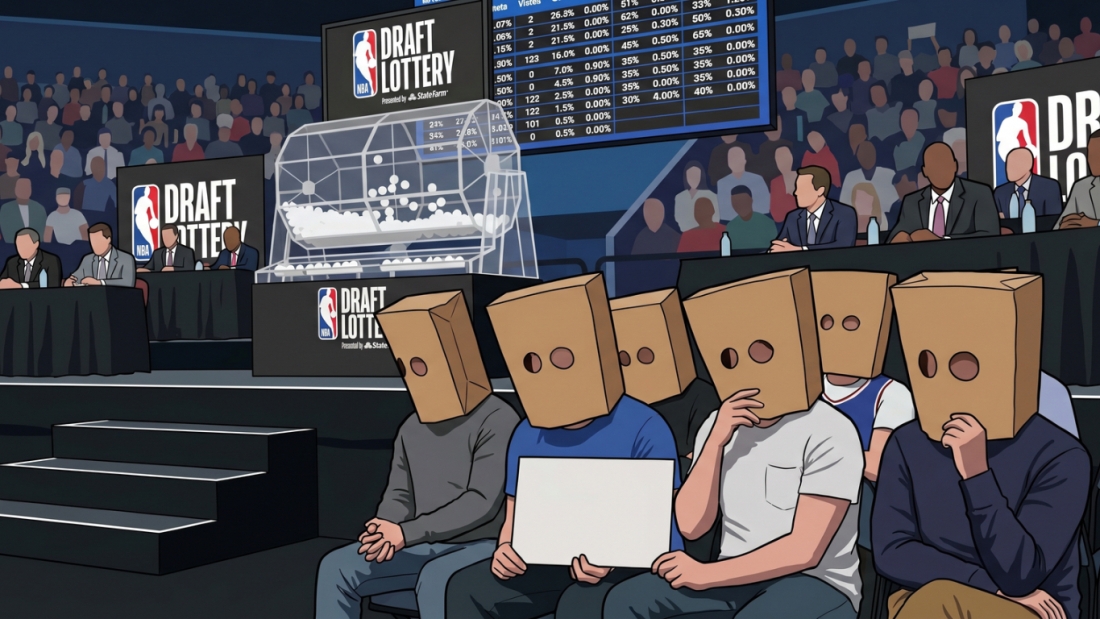
The proposed “3-2-1” lottery system is designed to change the incentive structure. Instead of rewarding the three worst teams with the best odds at the No. 1 pick, the league would actually penalize them. The bottom three teams would receive just two lottery balls each (a 5.4% chance at the top pick), while the next seven non-playoff teams would get three lottery balls each (an 8.1% chance). The system would expand the lottery from 14 to 16 teams and introduce a “draft relegation” floor — meaning the three worst teams cannot fall below the 12th pick.
Additionally, the proposal includes restrictions preventing teams from winning the No. 1 pick in consecutive years or securing three consecutive top-five picks. The NBA would also gain expanded disciplinary authority to penalize teams perceived to be intentionally losing, including the power to reduce lottery odds or modify draft positions. And honestly, I get where the NBA is coming from.
Why Reform Is Necessary
The current system has created a situation where being terrible can feel like a strategy. Not just losing because a roster lacks talent, but losing in a way that becomes organizationally useful. Resting players. Shutting guys down. Leaning into losses. However it gets framed, fans know what they’re watching. That’s damaging to the product.
The Fan Perception Problem
Here’s the paradox: modern NBA fans spend a lot of time complaining that the league is soft, that it lacks real competition, that the stars don’t battle like they used to. They criticize free agency for creating super teams, complain about flopping and point to the regular season as meaningless. They say there’s no parity. But tanking is doing exactly what undermines every one of those complaints.
When teams are actively trying to lose — when they’re resting players in crucial games, shutting down guys before the playoff race is even decided, or going through the motions in November because they’ve already accepted they won’t compete — they’re proving the fans’ point for them.
The NBA does feel soft when half the league has given up. It doeslack real competition when established teams are playing the long game instead of trying to win right now. The perception that the regular season doesn’t matter becomes a self-fulfilling prophecy. Tanking is the actual villain in the story fans are telling about the NBA. It’s not the flopping or the free agency or the officiating — it’s the acknowledgment that some teams have simply opted out of the current season for strategic reasons.
Adam Silver’s Stance
Commissioner Adam Silver has called tanking a “systemic infection” and a significant league-wide problem. The league has already started fining teams for sitting healthy players in crucial late-season games, but the fines haven’t been enough. The Utah Jazz and Indiana Pacers were both hit with penalties for benching capable players down the stretch, but the financial cost of a fine is nothing compared to the potential value of landing a franchise-altering player.
The frustrating part is that the NBA playoffs have shown how good the league can be when competition is real. The teams that made it are battling. The margins are thin. Every matchup feels like it has stakes. The postseason has been a showcase of depth, talent and parity among serious teams. But then you look at the bottom of the standings, and it feels like a completely different league.
That contrast is exactly why reform is needed. The NBA cannot have one part of its product delivering elite competition while another part is quietly asking fans to sit through games where the long-term reward is losing. It’s bad for television. It’s bad for arenas. It’s bad for players. And it’s especially bad for fans who pay real money to watch teams that may not be prioritizing wins.
The Legitimate Concerns
Of course, no lottery system is going to completely eliminate tanking. Teams will always look for advantages. Front offices will always understand the value of elite draft talent. And in a star-driven league, the possibility of landing a franchise-changing player will always tempt bad teams to think long term. But the NBA can at least stop making the incentive so obvious.
Critics rightfully point out that some bad teams are not tanking; they’re just bad. Injuries happen. Rebuilds take time. And if a team is truly lacking NBA-level talent, punishing it in the draft could make the rebuild even harder. That’s the tricky balance the league has to manage.
There’s also concern that the proposal might simply shift tanking behavior rather than eliminate it. Teams hovering around the 9th or 10th seed in the play-in tournament could be incentivized to lose a few more games to land in the higher-odds non-playoff pool. The difference between 5.4% and 8.1% lottery odds is significant enough that fringe playoff teams might strategically aim for that “sweet spot” just outside the bottom three. That’s a real risk.
NBA Proposes New Lottery System to Crack Down on Tanking:
— NBACentral (@TheDunkCentral) April 28, 2026
• Lottery expands from 14 → 16 teams
Relegation zone (bottom 3 teams) gets fewer odds for No. 1 pick
• Teams outside bottom 3 get better lottery odds (3 balls vs 2)
• Play-in teams also receive lottery balls… pic.twitter.com/BPPNOBdKK7
Here’s how the new lottery odds will look:
— NBACentral (@TheDunkCentral) April 29, 2026
(h/t @LevAkabas ) pic.twitter.com/RlDzwc3Fz2
But the Status Quo Isn’t Working
Still, the status quo is not working. As we’ve seen with the NBA’s ongoing viewership challenges, the league is struggling to maintain domestic engagement despite record global reach. One contributing factor is the perception that too many regular-season games don’t matter — either because playoff spots are locked in early or because bad teams have already checked out. When a significant portion of the league appears to be playing for draft position rather than wins, it undermines the product’s credibility.
The NBA is at its best when teams are trying to win. This postseason has been proof of that. Competitive basketball sells itself. Game 7s sell themselves. Rivalries, pressure, adjustments, stars rising and role players making huge shots — that’s the product. The bottom of the league should not be allowed to drag that down.
A Step in the Right Direction
The proposed system isn’t perfect. It includes a sunset provision expiring after the 2029 draft, acknowledging that the league will need to evaluate whether the changes actually work or create new problems. That built-in review period is smart — it shows the NBA recognizes this is an experiment, not a permanent solution. But the motivation behind it is right.
The league has to protect competitive integrity. It has to make losing less attractive. And it has to send a message that rebuilding is acceptable, but giving up on seasons is not. By penalizing the three worst teams while improving odds for teams just above them, the NBA is trying to create an environment where teams fight to stay competitive even when playoff hopes are gone. That’s a healthier setup than what exists now.
The Board of Governors is scheduled to vote on the proposal May 28, with implementation potentially beginning with the 2027 draft. If approved, it will represent the NBA’s most aggressive attempt yet to address the tanking problem.
Stop the Tank!
Because when the NBA is good, it’s really good. The league just gave fans a weekend full of Game 7 drama. That should be the standard everyone is chasing — not a race to the bottom for better lottery odds.
While the NBA’s anti-tanking proposal may need tweaking, and legitimate concerns about unintended consequences deserve serious consideration, doing nothing is no longer an option. The three-tiered lottery system at least attempts to realign incentives in a way that rewards competitive play rather than strategic failure. That is the direction the league needs to move.
Will it completely solve tanking? Probably not. Will it create new strategic considerations for teams on the playoff bubble? Possibly. But will it make the final weeks of the regular season more competitive and watchable than the current system allows? That’s the bet Adam Silver and the NBA are making — and it’s a bet worth taking.
Leave A Comment